

Alex Chalkias
29 posts

The 12th OSM Hackfest, or OSM mid-release NINE (MR#9) Hackfest, is one for the books and Canonical happily shared the presenter floor with the rest of the Open Source MANO (OSM) community. The event spanned the whole week from September 7th to 11th, with Wednesday September 9th afternoon being used for the OSM Ecosystem day.
Another great KubeCon has recently come to an end – which is nothing less than what we expected. After all, that’s why Canonical and Ubuntu have been consistently present at KubeCon & CloudNativeCon EU, to connect with the community. This year, we showcased Canonical’s conformant, interoperable, multi-cloud Kubernetes through our two Kube
In an era where container technologies have taken the industry by storm, one of the most common online searches on the topic of containers is ‘Kubernetes vs Docker’. The relevance and accuracy of this comparison is questionable, as it is not really comparing apples to apples. In this blog post, we will attempt to clarify

Canonical is proud to announce the general availability of OSM release EIGHT images in it’s Charmed OSM distribution. As of Release SEVEN, OSM is able to orchestrate containerised network functions (CNFs) leveraging Kubernetes as the underlying infrastructure for next-generation 5G services. Release EIGHT follows the same direction and br
High availability (HA) for MicroK8s, the lightweight Kubernetes, is now available as a tech preview for Linux, Windows and macOS. The Kubernetes control plane can now be distributed across multiple nodes, bringing resiliency to the cluster while maintaining a low footprint using Dqlite, the distributed SQL engine as the Kubernetes datasto
Do you have a big data center? Do you have terabytes of confidential data stored in that data center? Are you worried that your data might be exposed to malicious attacks? One of the most prominent security features of storage solutions is encryption at rest. This blog will explain this in more detail and how

Canonical concluded its participation in the 9th OSM Hackfest with a renewed sense of fellowship with the Open Source MANO (OSM) community and great pride in the collaborative work that enabled an end-to-end mobile network orchestration demo using OSM’s model-driven capabilities to onboard network services. Following the successful organi
Kubernetes has been successful for a number of reasons, not the least of which is that it takes care of things that application developers may not want to bother with – such as, for example, networking. Multus is a feature that can be used on top of Kubernetes to enable complex networking use cases. Kubernetes
Ubuntu 20.04 LTS has just arrived. The latest LTS comes with a new version of the Linux kernel – 5.4 – which brings a lot of exciting new features, faster boot times, enhanced performance and security. Additionally, the Canonical kernel team ran benchmark tests to validate the performance improvements of the new kernel. Defining which
The stable release of LXD, the machine container hypervisor, is now available. LXD 4.0 is the third LTS release for LXD and will be supported for 5 years, until June 2025. This version comes with a significant amount of new features including adding virtual machines (VMs) support, the introduction of projects and improved networking, stor
Ceph upstream released the first stable version of ‘Octopus’ today, and you can test it easily on Ubuntu with automatic upgrades to the final GA release. This version adds significant multi-site replication capabilities, important for large-scale redundancy and disaster recovery. Ceph v15.2.0 Octopus packages are built for Ubuntu 18.04 LT

The latest release of Kubernetes is now available for download and experimentation, with the MicroK8s Kubernetes 1.18 release candidate. The easiest, fastest way to get the latest Kubernetes is to install MicroK8s on your machine. Just run: sudo snap install microk8s –channel=1.18/candidate –classic Or from snapcraft.io: https://snapcraft
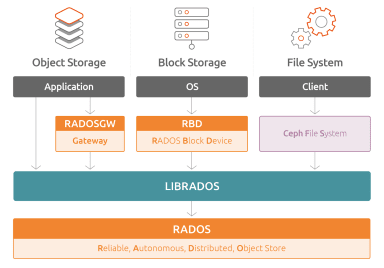
Ceph is a compelling open-source alternative to proprietary software-defined storage solutions from traditional vendors, with a vibrant community collaborating on the technology. Ubuntu was an early supporter of Ceph and its community. That support continues today as Canonical maintains premier member status and serves on the governing bo
- Previous page
- 1
- 2
- Next page