
Blog posts tagged "Charmed Kubernetes"

Canonical announces full enterprise support for Kubernetes 1.15 using kubeadm deployments, its Charmed Kubernetes, and MicroK8s; the popular single-node deployment of Kubernetes. The MicroK8s community continues to grow and contribute enhancements, with Knative and RBAC support now available through the simple microk8s.enable command. Kna
March 25, 2019 Canonical announces full enterprise support for Kubernetes 1.14 using kubeadm deployments, its Charmed Kubernetes, and MicroK8s, its popular single-node deployment of Kubernetes. MicroK8s provides Kubernetes 1.14 on any Linux desktop, server or VM – over 40 Linux distros. Mac and Windows are supported too, with multipass. E

February 28, 2019 – Canonical today announced support for containerd in its 1.14 releases of Charmed Kubernetes and Microk8s, improving security and robustness. “Containerd has become the industry-standard container runtime focused on simplicity, robustness and portability.” said Carmine Rimi, product manager for Kubernetes at Canonical.

Canonical is pleased to announce full enterprise support for Kubernetes 1.13 on Ubuntu, including support for kubeadm, and updates to MicroK8s – our popular single-node deployment of Kubernetes. Canonical’s certified, Charmed Distribution of Kubernetes (CDK) is built from pure upstream binaries, and offers simplified deployment, scaling,

This post walks through the use of GPGPUs with Kubernetes and DevicePlugins. We’ll use MicroK8s for a developer workstation example and charmed K8s for a cluster since that’s a consistent multi-cloud Kubernetes approach. The various cloud CAAS offerings like GKE are also enabling GPGPU facilities so you may want to try those too. We’ll us

Dell EMC and Canonical today announced the continued evolution of their long-standing partnership to bring a tested and validated container orchestration solution to market through a reference architecture framework that helps organisations quickly and confidently implement Kubernetes technologies into production. The partnership brings t

Canonical has released MicroK8s – a fast and efficient upstream Kubernetes delivered as a single snap package that installs on 42 flavours of Linux. With a small disk and memory footprint, MicroK8s provides an efficient way to deploy Kubernetes in seconds, whether on the desktop, the server, an edge cloud, or IoT device. MicroK8s is avail
Canonical is pleased to announce commercial support for Kubernetes clusters deployed using kubeadm. Companies using kubeadm to deploy Kubernetes in production, development or multi-stage environments, can immediately benefit from enterprise support through Ubuntu Advantage for Kubernetes support on a per-node basis. Support for official D

Canonical, the company behind Ubuntu, and Supermicro, a global leader in enterprise computing, storage, networking and green technologies, today announce a joint offering helping enterprises to accelerate the design and deployment of their Kubernetes stack through an optimised, pre-certified solution. With containerisation technology such
The appeal of Kubernetes is universal. Application development, operations and infrastructure teams recognise diverse reasons for its immediate utility and growing potential — a testament of Kubernetes’ empathetic design. Web apps, galvanised by the 12 factor pattern as well as microservice-structured applications find a native habitat in

Charmed distribution of Kubernetes clusters auto-apply vulnerability patches for CVE-2018-1002105 On December 3 2018, the Kubernetes project disclosed a security vulnerability in all versions of its popular container orchestration software. The vulnerability, CVE-2018-1002105, exists in the Kubernetes API server, and allows an attacker t
This article describes the advantages users of Charmed Kubernetes enjoy through the high degree of automation charms offer the operator. One of the hardest problems of infrastructure-as-a-service operations is upgrading. Charms make it an easy 4 step process that is highly repeatable and predictable in its outcome. Kubernetes on Ubuntu is

Today, Canonical, the company behind Ubuntu, announces that Canonical’s Distribution of Kubernetes (CDK) is now commercially available and supported on processors and servers based on 64-bit Arm® v8-A architecture. The data centre is evolving to support new workload requirements, it is transforming to be optimised for workloads such as: 5
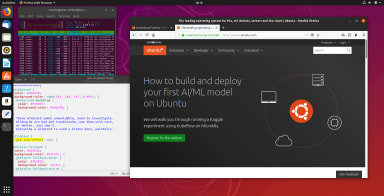
London, UK, 18th October 2018; Canonical today announced the release of Ubuntu 18.10, focused on multi-cloud deployments, AI software development, a new community desktop theme and richer snap desktop integration. “Ubuntu is now the world’s reference platform for AI engineering and analytics” said Mark Shuttleworth, CEO of Canonical. “We

Kubernetes: the tech industry has become pretty well versed in talking about what has become one of the biggest technology trends in the past few years with most claiming some involvement in it. Canonical also does Kubernetes, but not in a ‘me too!’ kind of way. The Charmed Distribution of Kubernetes (CDK) is pure upstream
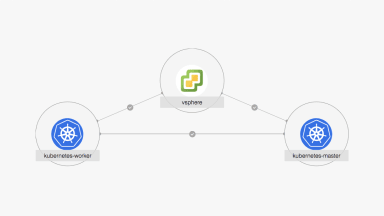
This article on Kubernetes & vSphere integration originally appeared at Kevin Monroe’s blog Background Recently, Juju began supporting cloud-native features via “integrator” charms (e.g.: aws-integrator, gcp-integrator, openstack-integrator). These allow charms to request things like persistent storage from a cloud provider without having