
Blog posts tagged "cloud"
13th January 2021 – Canonical, the publisher of Ubuntu, today announced that its Charmed OpenStack has been selected by Telefonica Brazil to – in a first for the region – migrate its online charging system (OCS) to its private cloud, Unica Next. The transformation project will see eight private clouds built on Charmed OpenStack, geographi

Welcome back to our series on MAAS CLI operations. In our previous post, we learned how to acquire and deploy machines using the MAAS CLI. It was also evident that the JSON output from the allocate and deploy commands was very lengthy for even one machine — so you can imagine how large a list

Canonical is happy to announce that MAAS 2.9 is now available. We’ll get to the details of installing it in just a moment, but first, let’s walk through a brief overview of the new features and fixes. Later on in this post, we’ll cover some of these features in much more detail. New features &

Continuing in our series on CLI-only MAAS operation, it’s time to deploy machines. In the previous post, we reached the point of creating and commissioning machines, using only the MAAS CLI. Moving forward, there are two key steps: acquiring machines, and then deploying them. Let’s take a look Acquiring a machine using the CLI When
Time passes by! A year has passed since SUSE announced its decision to discontinue SUSE OpenStack Cloud, and many enterprises are already affected. This is because SUSE OpenStack Cloud 8 reaches the end of life (EOL) in late May 2021. There are 6 months left to solve this problem. So it is time to think

The whole point of MAAS configuration is to get machines deployed. If you read the previous post in this series, you know how to install MAAS and do basic configuration using only the MAAS Command-Line Interface (CLI). So far, so good, but now we need to enable networking and create some machines. Enabling DHCP The
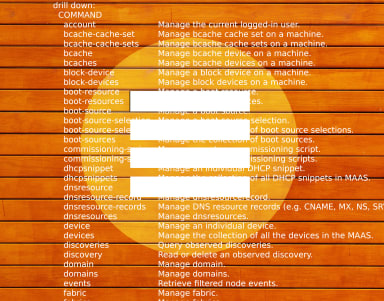
MAAS provides a state-of-the-art User Interface (UI), which is relatively simple to use, if the required inputs are known and understood. You may be less familiar with the MAAS Command Line Interface (CLI), which is actually more robust, providing additional functionality that’s not accessible via the web UI. In this series of blog posts,

Kubernetes and robotics make a great match. However, as we have seen, robots running ROS 2 can be tricky to set up on Kubernetes. This blog series has explored running ROS 2 on Kubernetes, set up a simple talker and listener, and distributed that demo across three machines. The configurations presented may not quite fit
Introduction Our simple ROS 2 talker and listener setup runs well on a single Kubernetes node, now let’s distribute it out across multiple computers. This article builds upon our simple ROS 2 talker / listener setup by running it on multiple K8s nodes. At the completion of this setup expect to have a ROS2 Kubernetes
While today we see an enormous amount of incredible software being published, both by tech giants and niche providers, there is a significant lag in the telco industry’s ability to leverage it. The promise of a software-defined technology landscape is, of course, agility. But what is the main factor preventing telecommunications enterpr
Kubernetes and ROS make a great match, but ROS2 can be tricky to set up. In this post we demonstrate a scalable system with MicroK8s on Ubuntu.
5th November, 2020: MOSCOW, Russia – MTS (NYSE:MBT; MOEX:MTSS), Russia’s largest mobile operator and a leading provider of media and digital services, announces the selection of Canonical’s Charmed OpenStack to power the company’s next-generation cloud infrastructure. MTS plans to leverage Charmed OpenStack’s advanced lifecycle management
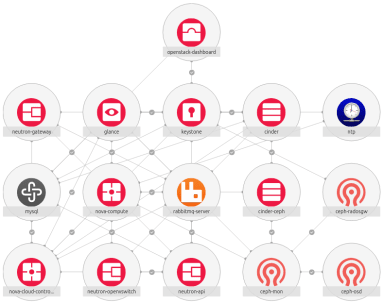
Canonical is proud to announce the availability of OpenStack Charms 20.10. This new release introduces a range of exciting features and several improvements which enhance Charmed OpenStack. OpenStack Victoria OpenStack Charms 20.10 brings OpenStack Victoria on Ubuntu 20.04 LTS (via Cloud Archive) and Ubuntu 20.10 with full support from Ca

Construct a prototype ROS 2 system distributed across multiple computers using Kubernetes. Our goal is not only to provide you with a working configuration, but also to help you understand why it succeeds and overcome future design challenges.
As part of the effort to build a flexible, cloud-native ready infrastructure, phoenixNAP collaborated with Canonical on enabling nearly instant OS installation. Canonical’s MAAS (Metal-as-a-Service) solution allows for automated OS installation on phoenixNAP’s Bare Metal Cloud, making it possible to set up a server in less than two minute
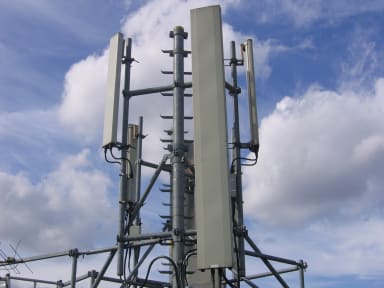
Telco cloud or a network function virtualisation infrastructure (NFVI) is a cloud environment optimised for telco workloads. It is usually based on well-known technologies like OpenStack. Thus, in many ways, it resembles ordinary clouds. On the other hand, however, it differs from them. This is because telco workloads have very specific r