
Blog posts tagged "containers"
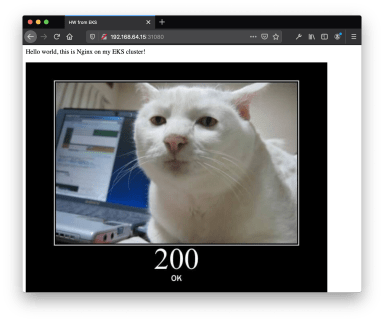
It’s re:invent season already, and we had exciting news to announce with Amazon this year. With all these remote sessions, what’s better than a quick lab to play with the new stuff? It’s starting to feel like Christmas already! We’re going to kill two birds with one stone (just an idiom, keep reading) and experiment
This article describes how easy it is for users of Charmed Kubernetes to switch from the Docker container runtime to containerd. You may have heard that Kubernetes is deprecating Docker as a container runtime after v1.20. Docker as an underlying runtime is being deprecated in favor of runtimes that use the Container Runtime Interface(CRI)

Today, Canonical announced the availability of its curated set of secure container application images on Amazon ECR Public, complementing the current offering. Multiple registries, one product Developers now also have access to the LTS Docker Image Portfolio from the Amazon ECR Public registry. Free and commercial versions of the hardened
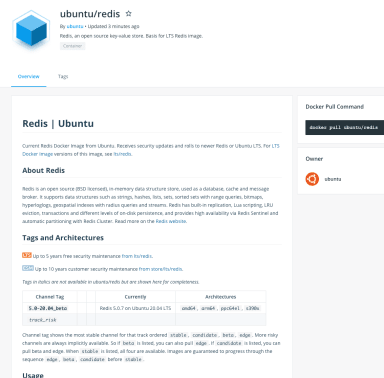
Ten year maintenance commitment on app images provides secure cloud software supply chain November 24th 2020: Canonical has published the LTS Docker Image Portfolio, a curated set of secure container application images, on Docker Hub. The LTS Docker Image Portfolio comes with up to ten years Extended Security Maintenance by Canonical. “LT
In an era where container technologies have taken the industry by storm, one of the most common online searches on the topic of containers is ‘Kubernetes vs Docker’. The relevance and accuracy of this comparison is questionable, as it is not really comparing apples to apples. In this blog post, we will attempt to clarify

Interested in getting started in robotics? There’s no need to purchase expensive hardware before you try some things out: simulate a TurtleBot3 instead! The simulator is complete with LIDAR, a camera, a gyro and many other sensors and actuators. You can also see this installation in action at the Ubuntu Robotics YouTube channel. Software

Snaps come in many shapes and forms: security tools, productivity apps, games, handy utilities, video editing software, and more. Often, most snap package a single application. But snaps can also include services, databases, as well as multiple binaries. How far can this concept scale, you ask? Quite far. There are also some rather unique
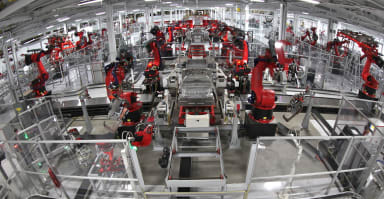
It’s the season for updates. The last few weeks have ushered in ROS 1 Noetic and ROS 2 Foxy, both of which target the recently released Ubuntu 20.04 Focal Fossa. As always, new releases come with trepidation: how can I install new software and test compatibility, yet keep my own environment stable until I know
What is Ubuntu Masters? The Ubuntu Masters conference stemmed from a vision to bring the engineering community together to freely exchange innovative ideas, in the spirit of open source. After two hugely successful conferences, connecting IT teams across industries and countries, and featuring speakers from innovators such as Adobe, Netfl
Many DevOps tools struggle as deployments change. Juju excels. 2020 heralds a decade for a divided technology industry. Software delivery is diversifying. Complexity is increasing. Teams are looking to make use of new approaches such as serverless and split large applications into microservices. They also need to retain their existing app
The container landscape is based on constantly evolving technology, with Kubernetes dominating the ecosystem for automating and managing containerised applications. While a very powerful software, it’s also complex. How do you compare Kubernetes to other options, get started with containers, and maintain over the long-term? In this webina

MicroK8s is the smallest, fastest multi-node Kubernetes. Single-package fully conformant lightweight Kubernetes that works on 42 flavours of Linux as well as Mac and Windows using Multipass. Perfect for: Developer workstations, IoT, Edge, CI/CD. Anyone who’s tried to work with Kubernetes knows the pain of having to deal with getting setup

Kata Containers can significantly improve the security and isolation of your container workloads. It combines the benefits of using a hypervisor, such as enhanced security, and container orchestration capabilities provided by Kubernetes. Together with Eric Erns from Intel, we have recently performed a webinar in which we presented the ben
Date: Nov 13-14Location: Messe Frankfurt, Frankfurt, GermanyBooth: 957 The TechWeek Frankfurt trade show will explore solutions to technology challenges organisations face across cloud computing and security, DevOps practices, Big Data management and more. With these major infrastructure themes in mind, the Ubuntu and Canonical team is ho

Container orchestration solutions such as Kubernetes allow development teams to be quick and agile with their software deployments. “One of the main features of Kubernetes is the ability to reduce the deployment of version piece of software down to a simple image tag which can be applied at the end of a command.” – said
LXD, the system container manager, developed by Canonical and shipped by default with Ubuntu, makes it possible to create many containers of various Linux distributions and manage them in a way similar to virtual machines (VMs) but with lower overhead costs associated with them. Unlike VMs, containers have the benefit of using a shared ke