
Blog posts tagged "financial-services"

The global health crisis has accelerated the digital transformation within the financial services industry. A McKinsey report highlights that “In a competitive environment of rising cost pressures, where rapid action and response is imperative, financial institutions must modernise their technology function to support expanded digitisatio

The fintech ecosystem is flourishing and exciting things are happening these days at the intersection of digital technology and financial services – thanks in part to an infusion of global fintech investment that reached US$98 billion across 2,456 deals in H1’21. This far outpaces last year’s annual total of $121.5 billion across 3,520 de
What is Open Source Strategy Forum? The Open Source Strategy Forum (OSSF) is a one-day conference for experts across financial services, technology and open source to deepen collaboration and drive innovation in the financial services industry. This year, Open Source Strategy Forum is live and in-person in London organised by the Linux Fo

Banking is at a pivotal moment. New regulations like virtual banking licensing frameworks, advances in open banking and big techs rapidly gaining ground in financial services, are dramatically changing the banking landscape, forcing incumbents to reinvent themselves. To be successful, the bank of the future will need to embrace emerging t

Covid-19 pandemic has presented unprecedented challenges and opportunities for financial institutions to embrace digital transformation initiatives at pace and scale. Finservs are enhancing their purview of digital transformation initiatives to stay relevant and create a technology foundation that enables them to quickly bounce back from

The future of Fintech infrastructure is hybrid multi-cloud. Using private and public cloud infrastructure at the same time allows financial institutions to optimise their CapEx and OpEx costs. Why Private clouds? A private cloud is an integral part of a hybrid multi-cloud strategy for financial services organisations. It enables financial
The Ubuntu in the wild blog post ropes in the latest highlights about Ubuntu and Canonical around the world on a bi-weekly basis.

The financial services (FS) industry is going through a period of change and disruption. Technology innovation has provided the means for financial institutions to reimagine the way in which they operate and interact with their customers, employees and the wider ecosystem. One significant area of development is the utilisation of artific
The last few years has been a time of major disruption in the Finserv sector. Artificial Intelligence (AI) technology has emerged as an important tool for providers of financial products and services to deliver more personalised and more sophisticated services to customers faster. The financial services sector is at the beginning of an ex

PostgreSQL is a powerful, open source object-relational database system that is known for reliability, feature robustness, and performance. PostgreSQL is becoming the preferred database for more and more enterprises. It is currently ranked #4 in popularity amongst hundreds of databases worldwide according to the DB-Engines Ranking. The ba
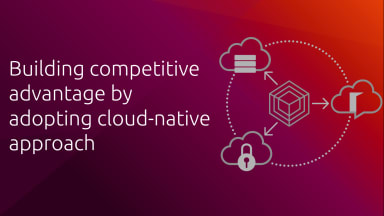
The business agility imperative With the economies of many countries heading towards recession, increasing regulations, growing security threats and increasing costs, financial services firms need practical solutions, now more than ever. Many of the financial technology firms (‘fintechs’) and mobile app-based challenger banks have taken a
The next 10 years will redefine banking. What will differentiate top banks from their competitors? Data and derived insights. Banks across the globe have been immersed in their digital agenda and with customers adopting digital banking channels aggressively, banks are collecting massive volumes of data on how customers are interacting at
Databases like MongoDB, a NoSQL document database, are commonly used in environments where flexibility is required with big, unstructured data with ever-changing schemas. This post explains what a NoSQL database is, and provides an overview of MongoDB, its use cases and a solution for running an open source MongoDB database at scale. What
- Previous page
- 1
- 2
- Next page